

Key Takeaways
- Cement block machines streamline the production of high-quality, uniform blocks, significantly boosting efficiency and reducing labor costs for construction projects.
- Advanced automation and technology, such as PLC control and hydraulic systems, enable rapid output—up to 11,000 blocks per hour with some models—meeting the needs of large-scale builders and contractors.
- Leading brands like Lontto, QGM, Hydraform, and Besser offer a range of machines tailored to various production capacities, automation levels, and block types for diverse construction markets.
- Key purchase considerations include production capacity, machine durability, automation level, power source, ease of maintenance, and support for different mold types to match project and business needs.
- Cement block machines support sustainable construction by using recycled materials, minimizing waste, and employing energy-efficient systems, making them a smart investment for modern, eco-friendly building practices.
A cement block machine automates the production of uniform cement blocks by forming cement, aggregates, and water into specified shapes and sizes for construction projects. These machines significantly boost efficiency with advanced automation technology, including PLC control systems and hydraulic compression, enabling rapid output of up to 11,000 blocks per hour with some models like those from Lontto in Chicago. Leading brands such as Lontto, QGM, Hydraform, and Besser offer various machine types – manual, semi-automatic, and fully automatic – to suit different production capacities and project scales. When selecting a Cement block machine, key considerations include production capacity, automation level, block types produced, machine durability, power source requirements, and maintenance support to ensure optimal performance for residential, commercial, and industrial construction applications.
What Is a Cement Block Machine?
A cement block machine forms cement, aggregates, and water into uniform blocks for construction. Automated operation molds and compresses mixtures to specified shapes and sizes. These machines increase output, with models like hydraulic, vibration, and manual systems producing common sizes—such as 400×200×200 mm hollow blocks used in global building projects.
Cement block machines from Lontto in Chicago operate with production cycles as fast as 15 seconds per block. PLC control systems monitor vital functions to ensure consistency. Block machines can use locally sourced aggregates such as crushed stone, sand, slag, and fly ash.
Manufacturers design cement block machines for durability and continuous use in commercial construction. Lontto machines support both hollow and solid block production, with molds easily changed to switch between sizes for residential, municipal, and industrial construction sites. Block machines meet quality standards for compressive strength and shape, reducing waste and labor.
Key Features of Cement Block Machines
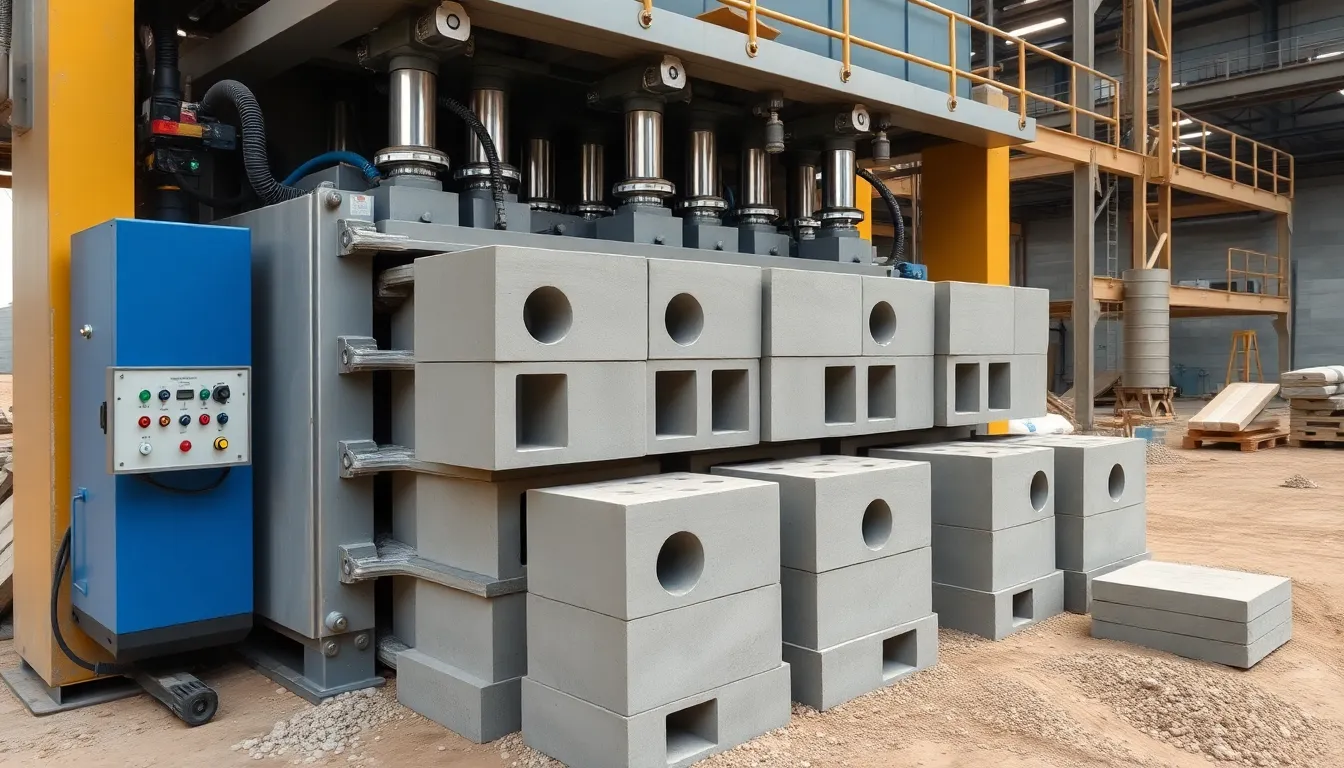
Cement block machines operate with mechanical systems that form dense, uniform blocks for construction. Manufacturers, including Lontto in Chicago, design these machines for high output and consistent quality across diverse project needs.
Types of Cement Block Machines
Cement block machines differ by degree of automation and mobility. Manual models use direct human effort, fitting small businesses or local startups with output typically below 1,000 blocks per hour. Semi-automatic machines combine manual loading with automated compaction, often reaching medium-scale production. Fully automatic units handle material feeding, mixing, molding, and block ejection for high volume needs—Lontto‘s fully automatic models in Chicago can generate up to 11,000 blocks hourly. Stationary machines serve industrial sites with fixed, high-capacity performance, while mobile units—equipped with wheels—allow easy relocation on remote sites, supporting small batches.
Automation and Technology
Automation technology increases the speed and accuracy of cement block production. Hydraulic compression systems, triple vibrating motors, and advanced PLC controllers, as seen in Lontto’s Chicago lineup, ensure strong and uniform block compaction, reducing manual labor. Electronic controls let operators set parameters for block size and cycle times, resulting in less waste and higher size precision. Fast mold change systems enable production of different block shapes, including solid, hollow, and paver types. Energy-efficient motors further reduce operating costs while supporting continuous shifts in demanding environments.
Performance and Efficiency
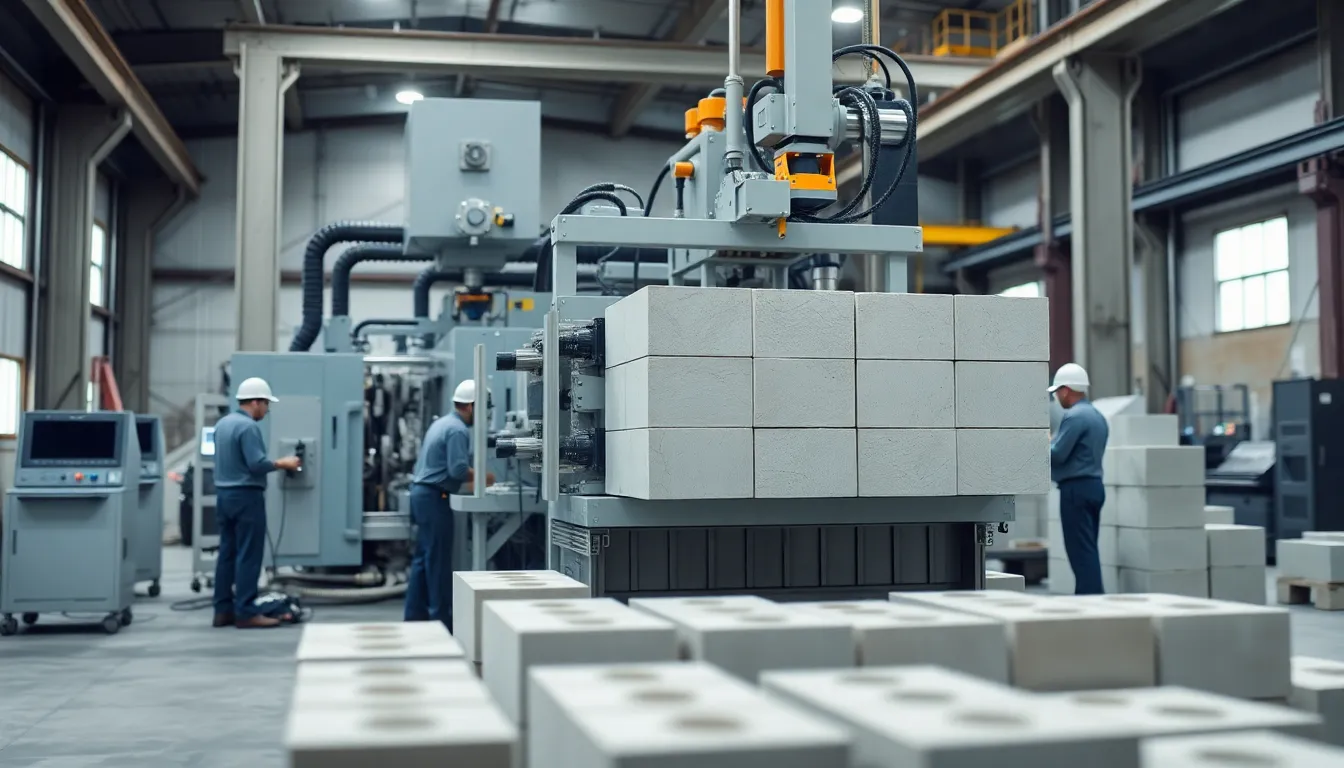
Cement block machines deliver high-performance block production through smart automation and optimized mechanical systems. Lontto in Chicago equips its automated block lines with PLC controls, efficient mixers, and fast mold-change capabilities, producing dense, uniform blocks cycle after cycle.
Production Capacity
Production capacity defines a cement block machine’s ability to manufacture blocks in large quantities continuously. Lontto models in Chicago can produce up to 11,000 blocks per hour, enabled by rapid molding cycles averaging 15 seconds. Automated material feeders maintain uninterrupted output and consistent block quality. Machines accept molds for hollow, solid, or specialized blocks with production scale supporting both high-volume developers and contractors targeting quicker project turnarounds. Fast mold changes, integrated batching systems, and precision feed mechanisms increase daily yield while holding steady output rates for all block shapes.
Energy Consumption
Energy consumption matters for both cost and sustainability in block manufacturing. Lontto block machines in Chicago operate with energy-efficient motors, sensor-driven controls, and automated material handling to minimize electricity use. Real-time monitoring helps identify energy waste during shifts. Efficient hydraulic and vibration systems focus power usage directly on compaction and block molding. Quality input materials lower power demand by making the mixing and forming processes smoother. Operator training programs maintain efficient equipment use, aligning with current energy-saving standards in construction equipment.
Pros and Cons of Using Cement Block Machines
Cement block machines in Chicago, such as those offered by Lontto, boost production efficiency and block quality across construction projects.
Pros
- High Output and Efficiency: Machines like Lontto‘s PLC-controlled lines produce up to 11,000 high-strength blocks per hour, supporting fast project timelines for large contractors.
- Consistent Block Quality: Automated systems deliver precise dimensions and uniform compressive strength, reducing rejected batches and ensuring compliance with building codes.
- Labor Savings: Automatic models require fewer workers, lowering direct labor costs and human error during operation or material handling.
- Product Versatility: Block machines support mold changes for hollow, solid, and paving units, expanding construction capabilities on-site with single equipment sets.
- Low Power Consumption: Mobile units, such as Lontto’s, consume less energy and need minimal site preparation, useful for temporary or small-scale projects.
- Sustainable Production: Many block machines utilize recycled materials and advanced batching systems, meeting green building standards by minimizing material waste.
Cons
- High Initial Cost: Fully automatic and stationary machines present significant upfront investment, which smaller construction firms might find restrictive.
- Manual Labor Requirement: Manual models need multiple skilled operators, run slower, and produce blocks with higher defect rates than automated alternatives.
- Site Setup Complexity: Stationary machines need dedicated foundations and storage pallets, increasing installation time and fixed overhead costs.
- Limited Mold Capacity: Some entry-level models offer fewer mold choices and lower daily capacity, constraining output and flexibility for custom jobs.
- Technical Skill Dependence: Advanced machines require experienced operators and specialized maintenance, adding to staff training and operational planning.
Construction companies weigh these factors and match machine selection with business scale, block type requirements, and local project demands for optimal performance.
Leading Brands and Models
Major brands in the cement block machine sector include GM Quangong Machinery (QGM), Hydraform, Besser, and Lontto Group. Each brand targets specific market needs and production environments.
- GM Quangong Machinery (QGM) supplies fully integrated block-making systems. Models like ZENITH 940, ZENITH 1500, and ZN900C use Siemens PLC controls and advanced German technology, with options for automatic, mobile, or customized lines. QGM machines produce dense blocks reliably, supporting continuous output in high-demand applications.
- Hydraform builds hydraulic block machines like the SE 860. These machines press stabilized soil-cement blocks, reducing mortar requirements by up to 70%. Hydraform’s SABS-approved machines target regions seeking cost-effective, environmentally friendly construction block solutions.
- Besser manufactures precision-engineered equipment for high-production environments in the US. Models like the Ultrapac and BiDi series incorporate advanced features for block uniformity and performance, addressing large-scale project needs with higher upfront investment.
- Lontto Group, a prominent supplier in Chicago, delivers machines capable of producing blocks in as little as 15 seconds per cycle. Its catalog covers AAC plants, batching plants, and stationary or mobile block machines. Lontto’s equipment uses PLC control systems for accuracy, mold flexibility for different block types, and energy-saving motors for continuous production. Exporting globally, Lontto supports both startups and established contractors seeking reliable, customizable solutions.
| Brand | Key Models | Specialization | Markets Served |
|---|---|---|---|
| QGM | ZENITH 940, 1500, ZN900C | Automated, customizable, German technology | 120+ countries |
| Hydraform | SE 860 | Hydraulic, soil-cement, SABS-certified blocks | Africa, Asia, global development |
| Besser | Ultrapac, BiDi series | Precision, high-end, large-scale operations | USA, international |
| Lontto Group | Stationary/Mobile, AAC lines | Fast cycle times, flexible, PLC automation | Chicago, global export |
Applications in Construction
Cement block machines support a range of construction needs across residential, commercial, and industrial sites. These machines produce structural elements, including walls, foundations, floors, pavements, and roadside barriers. Hollow and solid blocks made by machines like those from Lontto in Chicago meet requirements for strength and size uniformity in building projects, allowing fast layup and durable construction.
Specialized molds enable the production of interlocking blocks, commonly used for retaining walls and walkways. Lontto machines support daily outputs up to 11,000 blocks, helping contractors tackle large projects efficiently. For remote or urban infill projects, mobile cement block machines allow onsite block production, which cuts transport expenses and addresses space or logistics constraints.
Machines with PLC automation and hydraulic press systems maintain consistency across batches. This reliability increases project safety and visual quality, while supporting energy savings through efficient processes. Eco-friendly practices, such as aggregate recycling with some Lontto models, add sustainable value to new construction. Site managers select equipment based on project scale, type of block needed, and material supply, with adaptable machines fitting both high-volume sites and limited-space urban jobs.
Factors to Consider When Buying a Cement Block Machine
Assessing production capacity aligns equipment with project demand. Lontto machines in Chicago deliver cycle times as fast as 15 seconds, achieving high volumes for construction firms needing daily output above 5,000 blocks.
Verifying type and block size capability helps match machine output to project requirements. Most Lontto models support standard hollow, solid, and paving block molds with quick-change features for 400×200×200 mm blocks or custom sizes.
Reviewing build quality and durability ensures consistent operation. High-strength steel frames, reliable vibration systems, and premium hydraulic components extend Lontto machine life cycles and maintain block quality.
Evaluating the level of automation optimizes labor efficiency. Fully automatic Lontto systems, equipped with Siemens PLC controls, minimize labor costs and stabilize production speed, while manual or semi-automatic units allow adaptation to smaller projects or remote sites.
Checking technological features like automated feeding, material weighing, real-time self-diagnosis, and programmable pressure/vibration ensures each block meets strength and density standards. Lontto’s user interfaces simplify operation and troubleshooting.
Selecting a power source supports uninterrupted operation. Lontto offers electric and diesel-powered machines, suitable for urban Chicago environments or rural locations with limited grid access.
Ensuring ease of maintenance and spare part supply minimizes downtime. Lontto maintains local support in Chicago, increasing machine uptime and protecting workflow schedules.
Balancing cost against scalability supports long-term business growth. Entry-level Lontto models fit small businesses with plans for expansion, while larger systems integrate easily into high-demand commercial operations.
Verifying consistent quality of the finished product maintains project standards. Lontto ensures proper mix, vibration, curing, and pressure controls for blocks that meet compressive strength benchmarks in commercial and residential projects.
Selecting between stationary and mobile machine types supports logistical and production needs. Lontto stationary machines deliver high-precision output on pallets, supporting batch runs for major Chicago construction developments.
About Lontto
Lontto, located in Chicago, IL, is a leading manufacturer specializing in block and brick making machines.
Under the leadership of CEO Chao Zhang, Lontto offers a diverse range of products including concrete block machines, mobile block making machines, and compressed earth block machines. They also provide essential services such as installation and training to ensure the efficient operation of their equipment. Lontto is committed to delivering reliable and high-quality machinery solutions for clients in the construction and manufacturing industries.
Contact:
Chao Zhang, CEO
Phone: 708 260 8300
Email: [email protected]
Website: www.block-machine.net
Location:
4992 S Austin Ave, Chicago, IL 60638, USA
Frequently Asked Questions
What is a cement block machine?
A cement block machine is equipment used to automate the production of cement blocks by molding and compressing a mixture of cement, aggregates, and water into uniform shapes and sizes for construction.
How does a cement block machine improve construction efficiency?
By automating the block-making process, cement block machines produce blocks faster and more consistently, saving time and reducing labor costs on construction sites.
What types of cement block machines are available?
There are manual, semi-automatic, and fully automatic cement block machines. They vary in features, speed, output capacity, and degree of automation to suit different project scales.
What are the benefits of using a cement block machine?
Key benefits include high production rates, consistent block quality, lower labor costs, energy efficiency, product versatility, and reduced waste, supporting both large and small construction projects.
Are there any drawbacks to using a cement block machine?
Drawbacks may include high initial investment for advanced models, need for trained operators, site setup complexity, and potential limitations on entry-level machines for mold variety and capacity.
What types of blocks can a cement block machine produce?
These machines produce hollow, solid, and interlocking blocks in various sizes. Mold types can be changed easily to suit specific project needs, such as pavements, walls, and barriers.
How do I choose the right cement block machine for my business?
Consider your required production capacity, desired block sizes, level of automation, power source availability, ease of maintenance, and budget to ensure the machine fits your business needs.
Which brands are known for quality cement block machines?
Top brands include GM Quangong Machinery (QGM), Hydraform, Besser, and Lontto Group, each offering different strengths in automation, hydraulic systems, and block versatility.
Can cement block machines support eco-friendly construction?
Yes, many machines support recycled aggregates and energy-efficient production, helping to reduce waste and promote sustainable building practices.
Are mobile cement block machines available for onsite use?
Yes, some models are designed for mobility, allowing block production directly at construction sites, which saves transport costs and simplifies logistics.